
Noise and cooling: how to set up an ASIC miner at home
75 dB and 3.5 kW of heat: where to put an ASIC miner, how to quieten and cool it. Air cooling, water cooling and home mining models compared side by side.
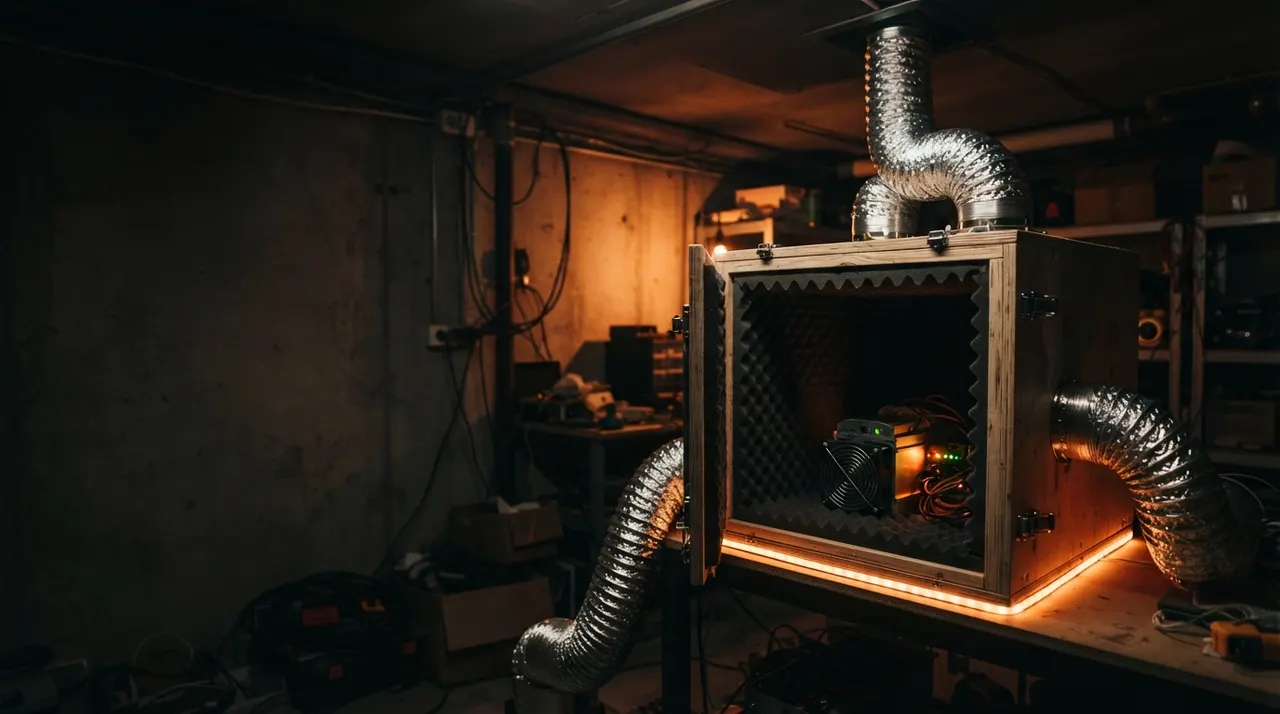
The first time a large ASIC miner is switched on at home, it usually gets switched off again very quickly. Two fans spinning at several thousand revolutions per minute produce approx. 75–76 dB, about as loud as a vacuum cleaner running non-stop. On top of that comes approx. 3.5 kW of heat.
Where to put the miner
- Garage, outbuilding, unused attic: the best places, because the noise does not bother the household.
- Basement: fine, provided it is ventilated. Without an exhaust the temperature rises quickly, and the miner throttles its performance or shuts down.
- Flat: only “home mining” models or water-cooled miners with the radiator outside.
Pay attention to humidity and dust. Condensation and garage dust are the most common causes of hashboard failure.
Air cooling
The principle is simple: cold outside air goes into the miner, and the hot air has to be expelled outside, not back into the room. In practice:
- a dedicated exhaust duct (spiral duct) from the back of the miner,
- an air intake with a dust filter,
- in winter, watch out for temperatures that are too low and for condensation. Most miners operate in the 0–40°C range.
Noise reduction
- A soundproof box with an acoustic labyrinth reduces noise by a dozen or so dB. It must allow a large airflow.
- Replacing the fans or using a fan emulator with quieter cooling (e.g. in heat recovery setups). This requires know-how, because overheating destroys the hardware.
- Low power (eco) mode reduces noise and heat, but also hashrate.
Water cooling (hydro)
“Hyd” models (e.g. Antminer S21 XP Hyd, S23 Hyd) have no loud fans. The heat is removed by a coolant that flows to a radiator outside the building (dry cooler) or to a heat exchanger. Advantages:
- quiet operation indoors,
- usually better efficiency and a longer service life,
- the option of heat recovery, e.g. for heating the building, domestic hot water or a swimming pool.
The downsides are a higher installation cost (pump, radiator, pipes, coolant) and usually a high-power supply, often three-phase.
Miners for the home
If you want to mine in a flat, choose a model designed for the home:
| Model | Power | Noise |
|---|---|---|
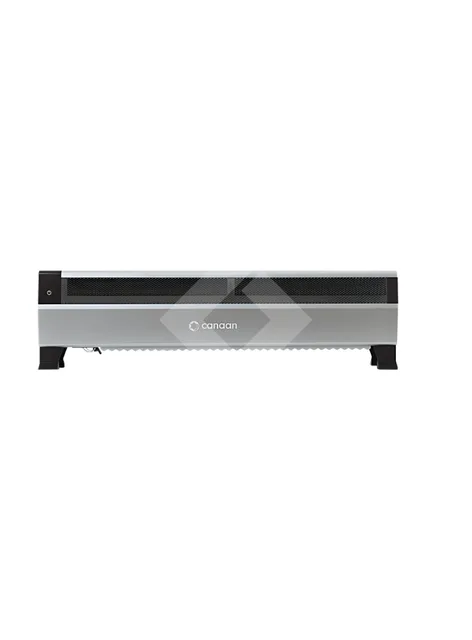
| Canaan Avalon Nano 3S | 140 W | approx. 40 dB |
| Canaan Avalon Mini 3 | 800 W | approx. 55 dB |
| Canaan Avalon Q | 1,674 W | approx. 45 dB |
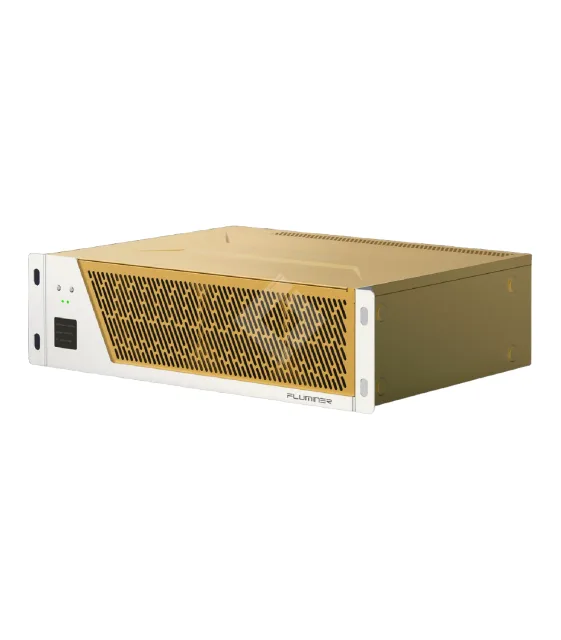
| Fluminer T3 | 1,700 W | approx. 45 dB |
They are less powerful than large miners, but you can put them in a room. In winter they also help heat it. You can check their current profitability in the ranking.
Heat recovery: mining as heating
Almost all the energy a miner draws is turned into heat. If you heat your building with electricity anyway, the miner works like an electric heater that mines on the side. In such a setup the cost of electricity is partly “paid back” in heating, and the profitability calculation looks much better than in a standard calculator.
Before you buy a large miner for your home, check three things: where you will expel the heat, whether the noise will bother anyone, and whether your electrical installation can handle 3.5 kW around the clock.
This article is for information only and is not investment or tax advice. Links to the store and partners may be affiliate links.
Miners in this article
- Profit/day
- $0.72
- Payback
- 9.6 years
- Break-even
- $0.065
- Profit/day
- $0.18
- Payback
- over 15 years
- Break-even
- $0.056
- Profit/day
- $1.35
- Payback
- 4.9 years
- Break-even
- $0.081
Read more
Exchanges with a MiCA licence: where to legally sell mined crypto in 2026
Since 1 July 2026 only exchanges with a MiCA licence may operate in the EU. Which ones have it, what about Binance and Polish exchanges, how to check it.
How much electricity does an ASIC miner use and how do you calculate the cost?
A simple formula for a miner's power consumption and electricity cost, examples for the Antminer S21 XP, L9 and Avalon Nano, and what really drives up the bill.
How to start mining cryptocurrency in Poland: a 2026 guide
Step by step: choosing a coin and an ASIC miner, electricity, location, mining pool, wallet and taxes. A guide for Poland, with no promises of quick profits.